Images
who says A, has to B like
Bendzulla × Breunig × Bilder.
an image says more than a thousand
then what do images say?
at first, pretty little. the title is reluctant. doesn’t promise a thesis and doesn’t ramble about. Bendzulla × Breunig show: images. almost sounds too easy. but it isn’t.
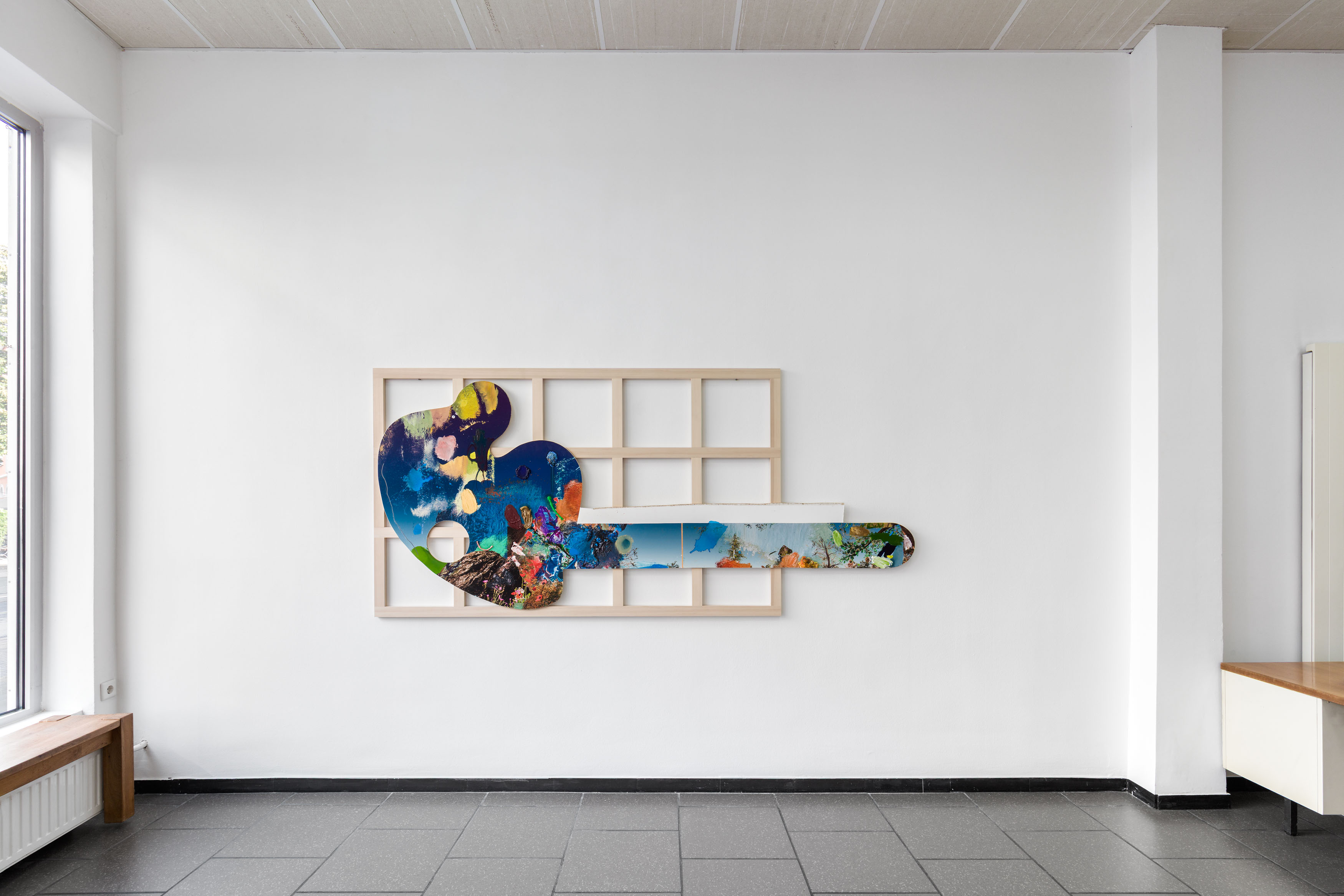
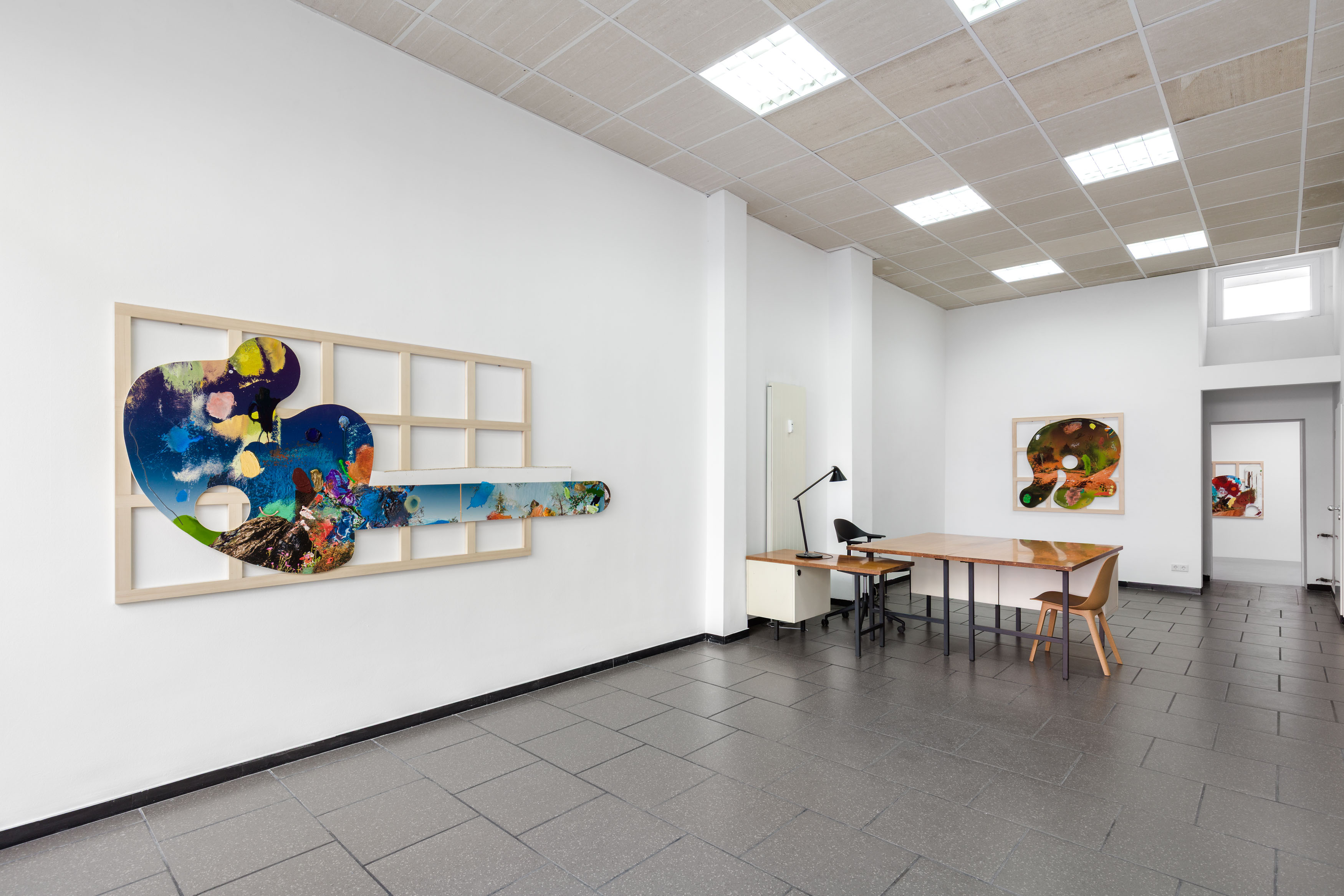
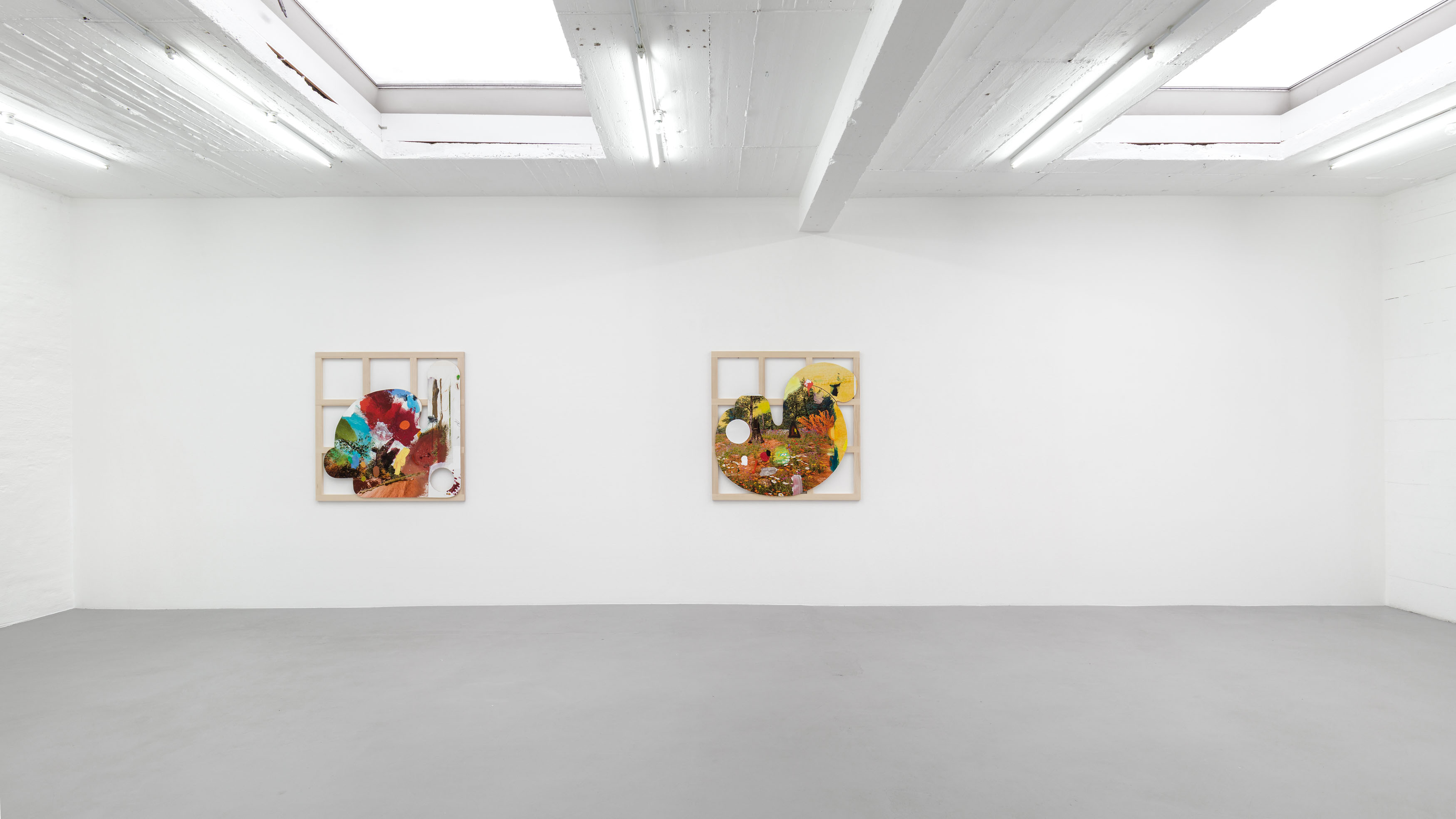
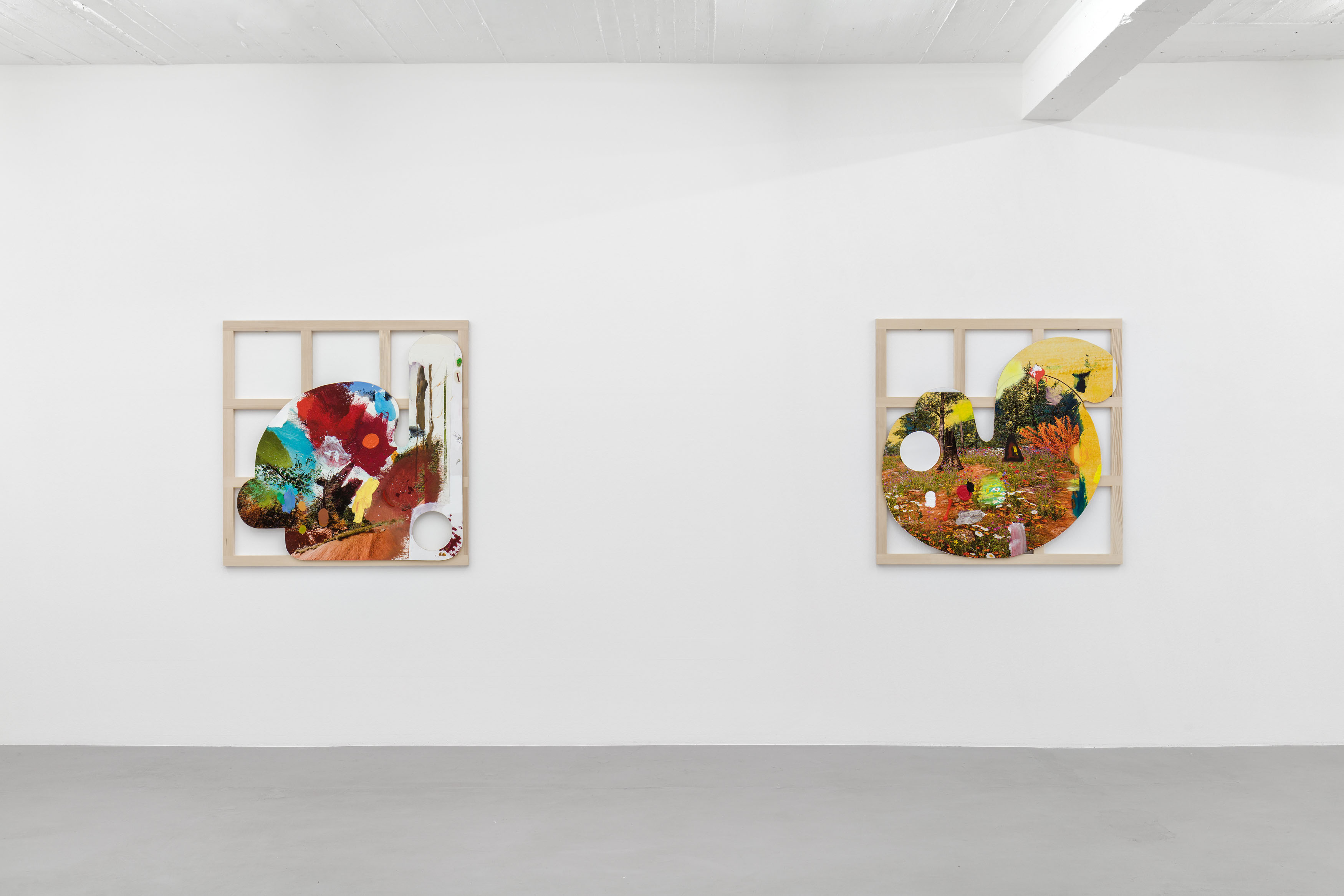
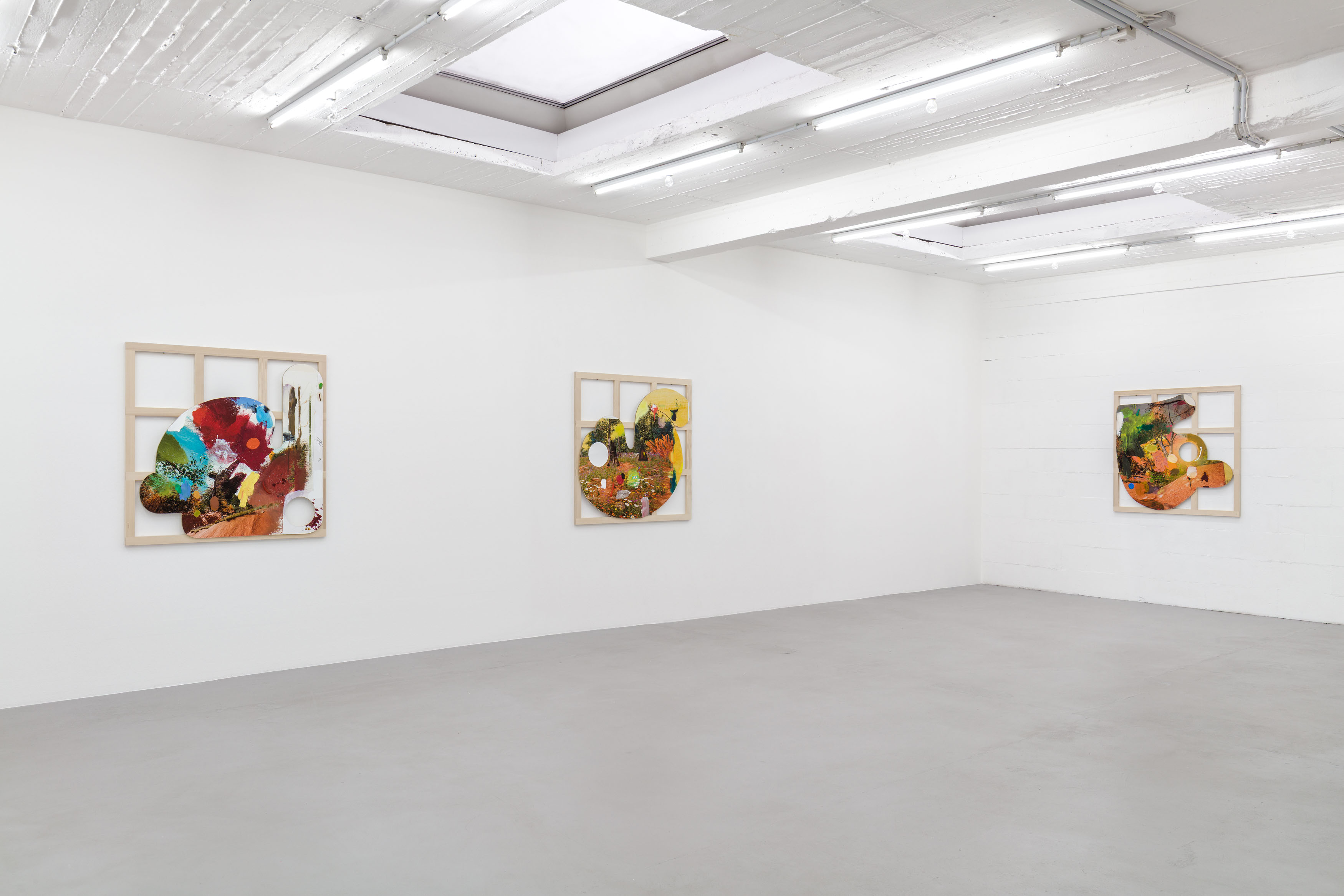
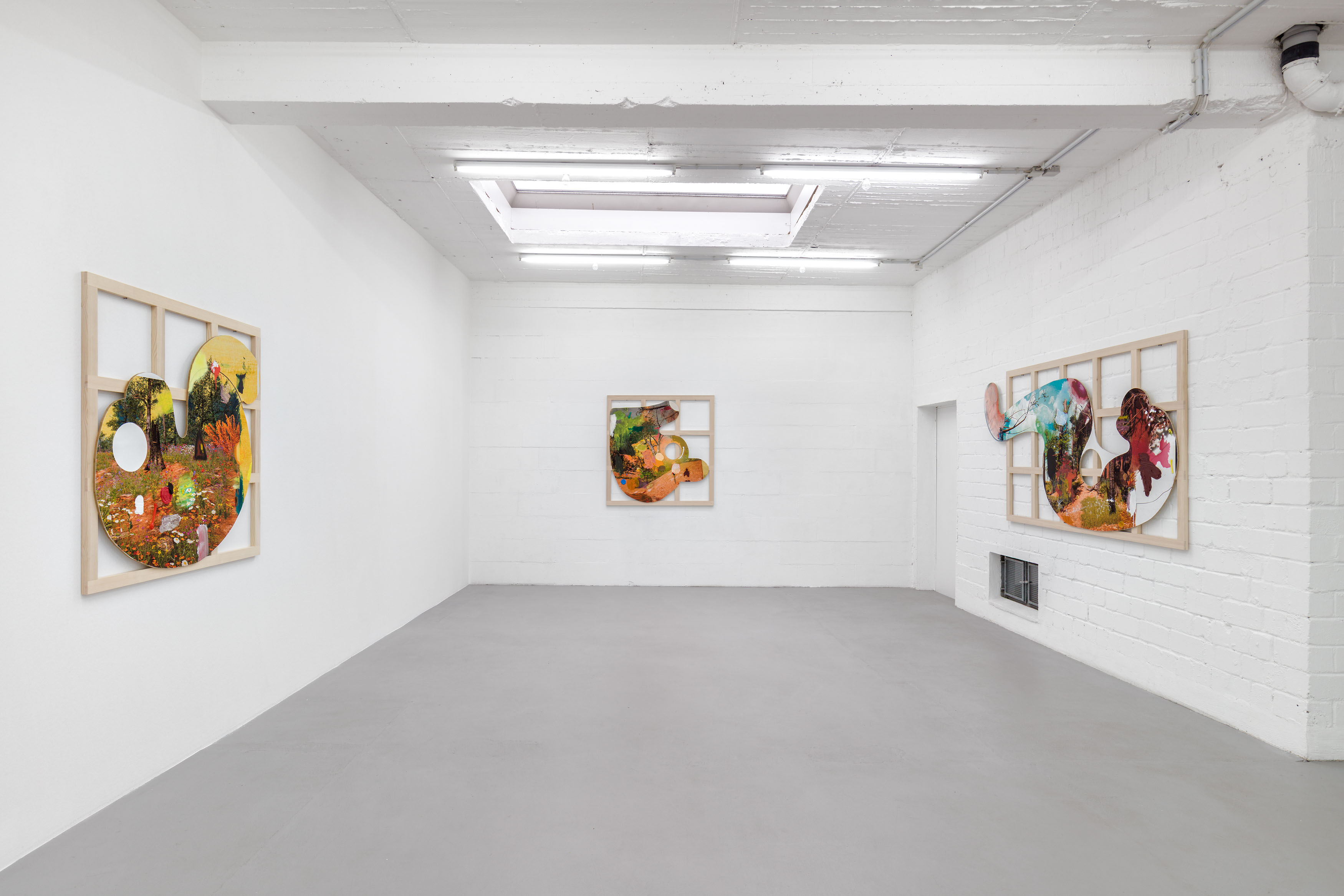
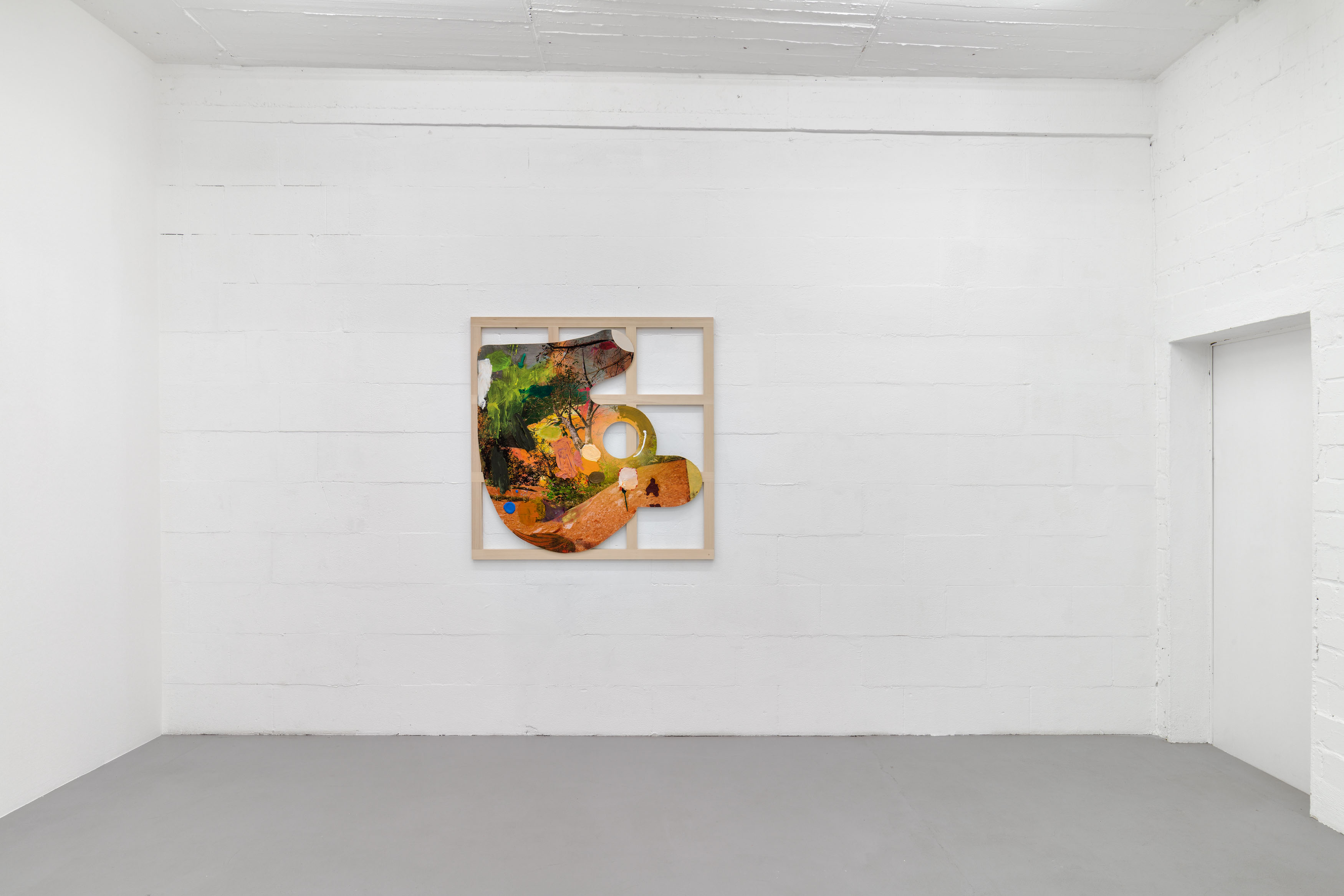
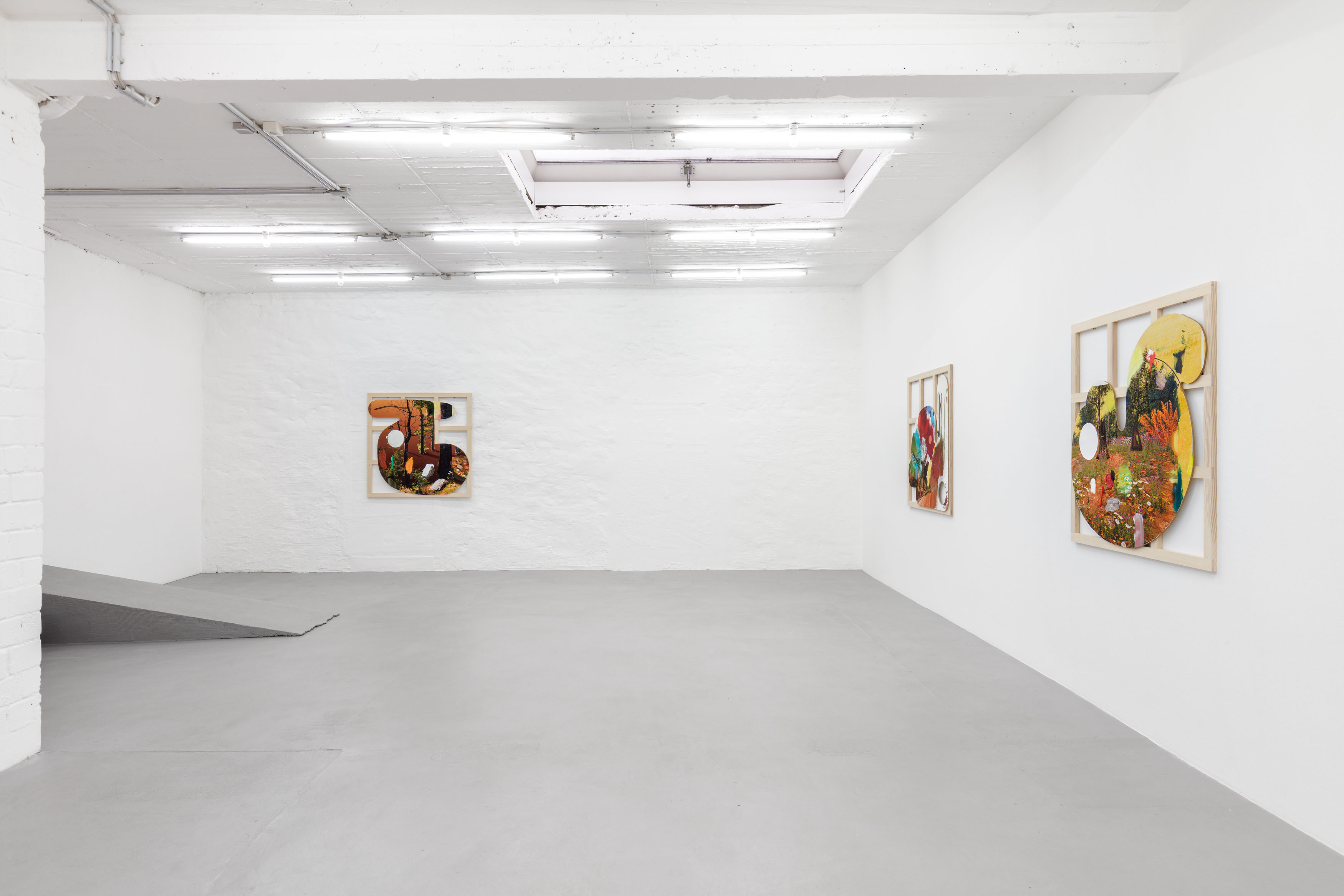
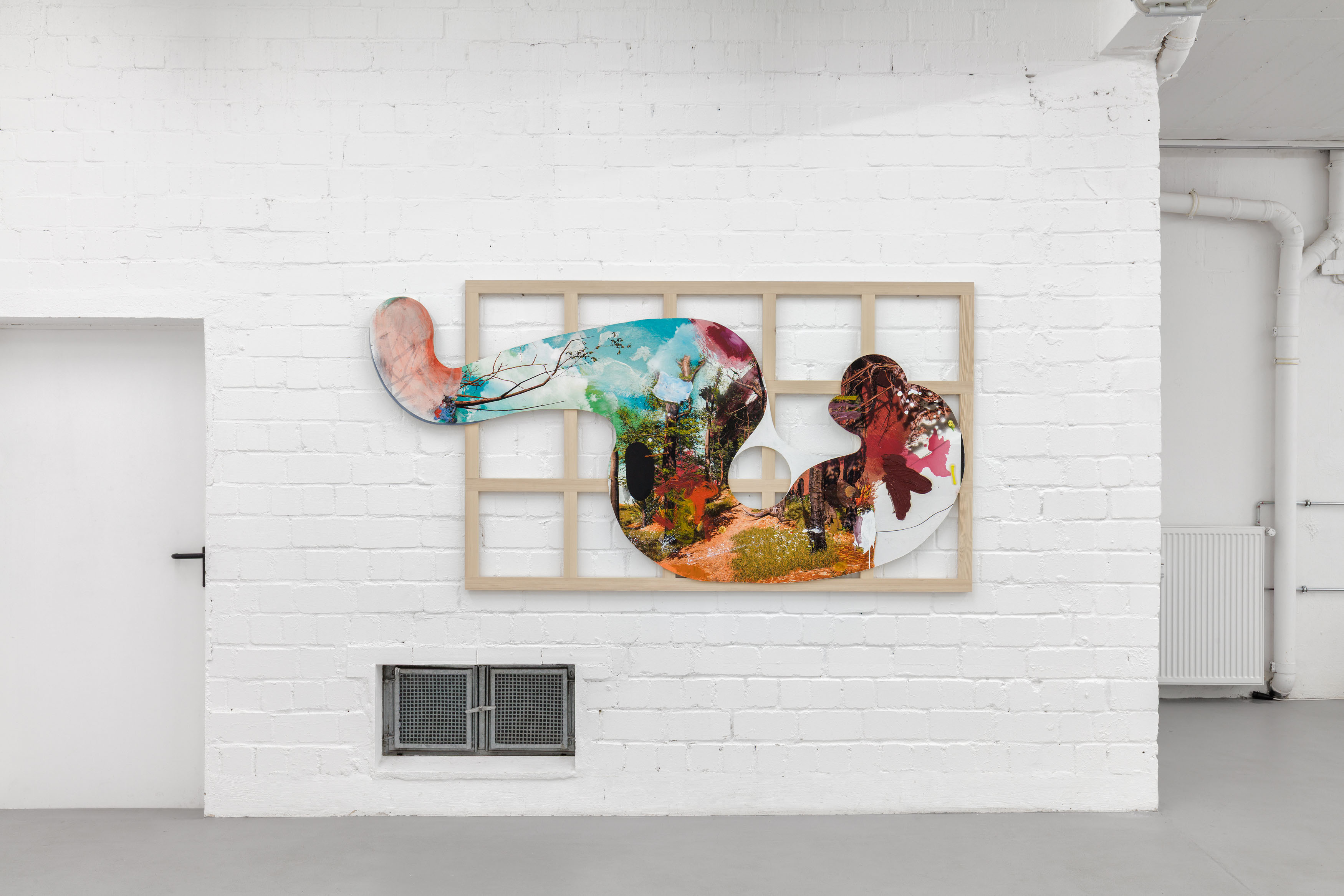
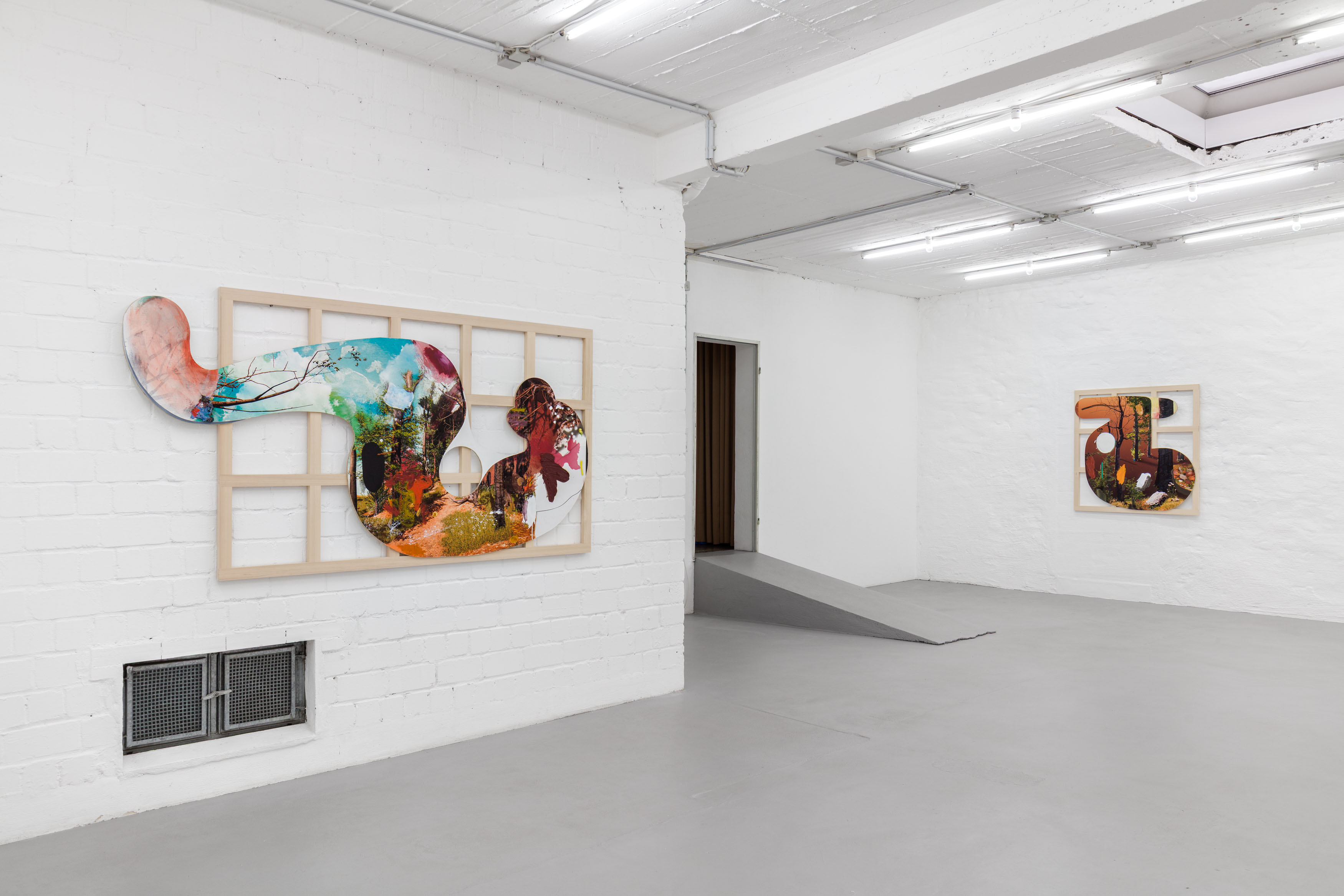
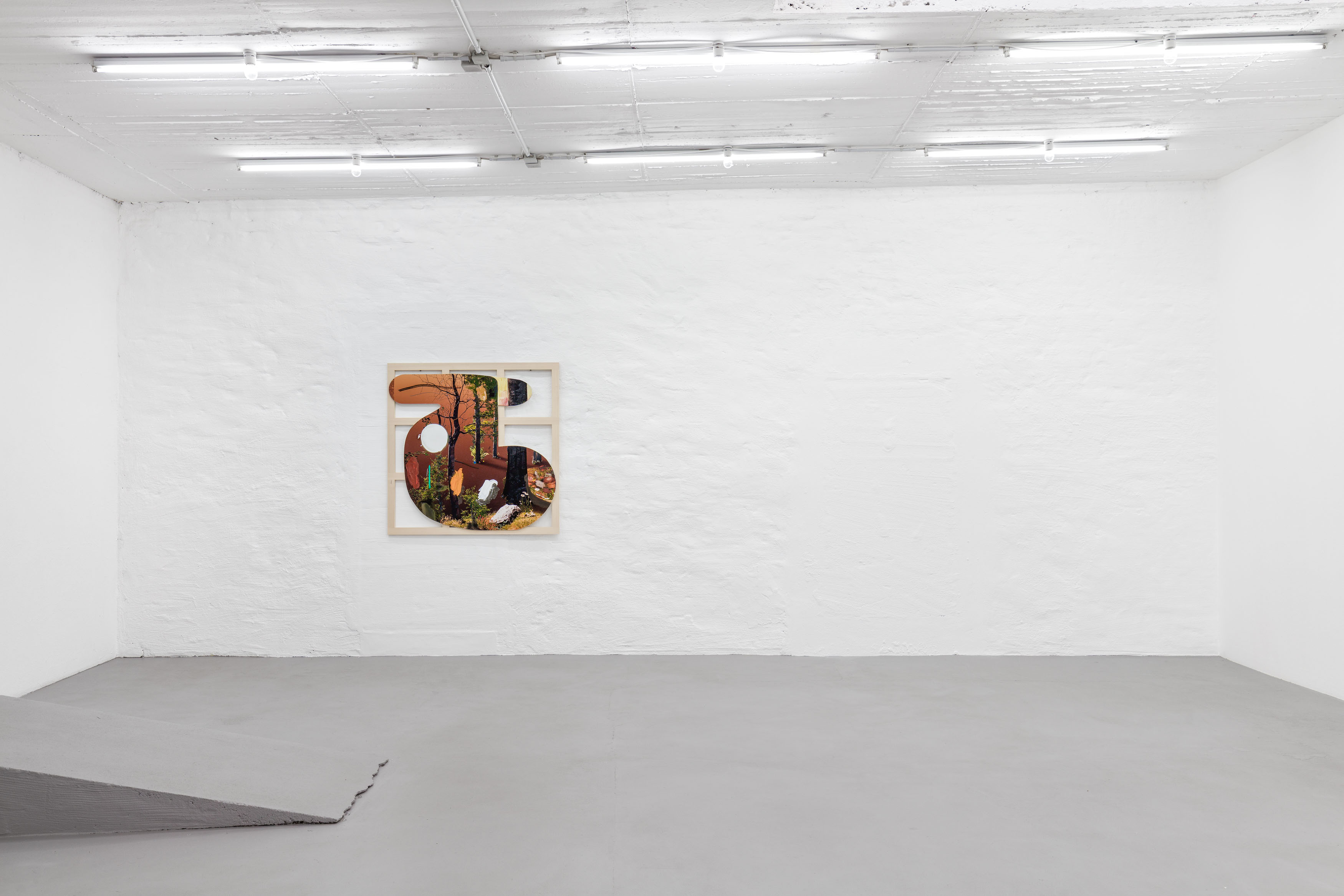
the joint works are untitled. they are made with digital prints, oil and acrylic on hand-made paper mounted on wooden stretchers. the image is not merely painted and not merely printed. it comes from the head, the computer, the printer and passes through the hand onto the paper and then painting steps into it once more. later, the images enter this space with you, enter your mind through your eyes, and then dwell there. later, these images will share a room with you, move through your eyes into your head and live there.
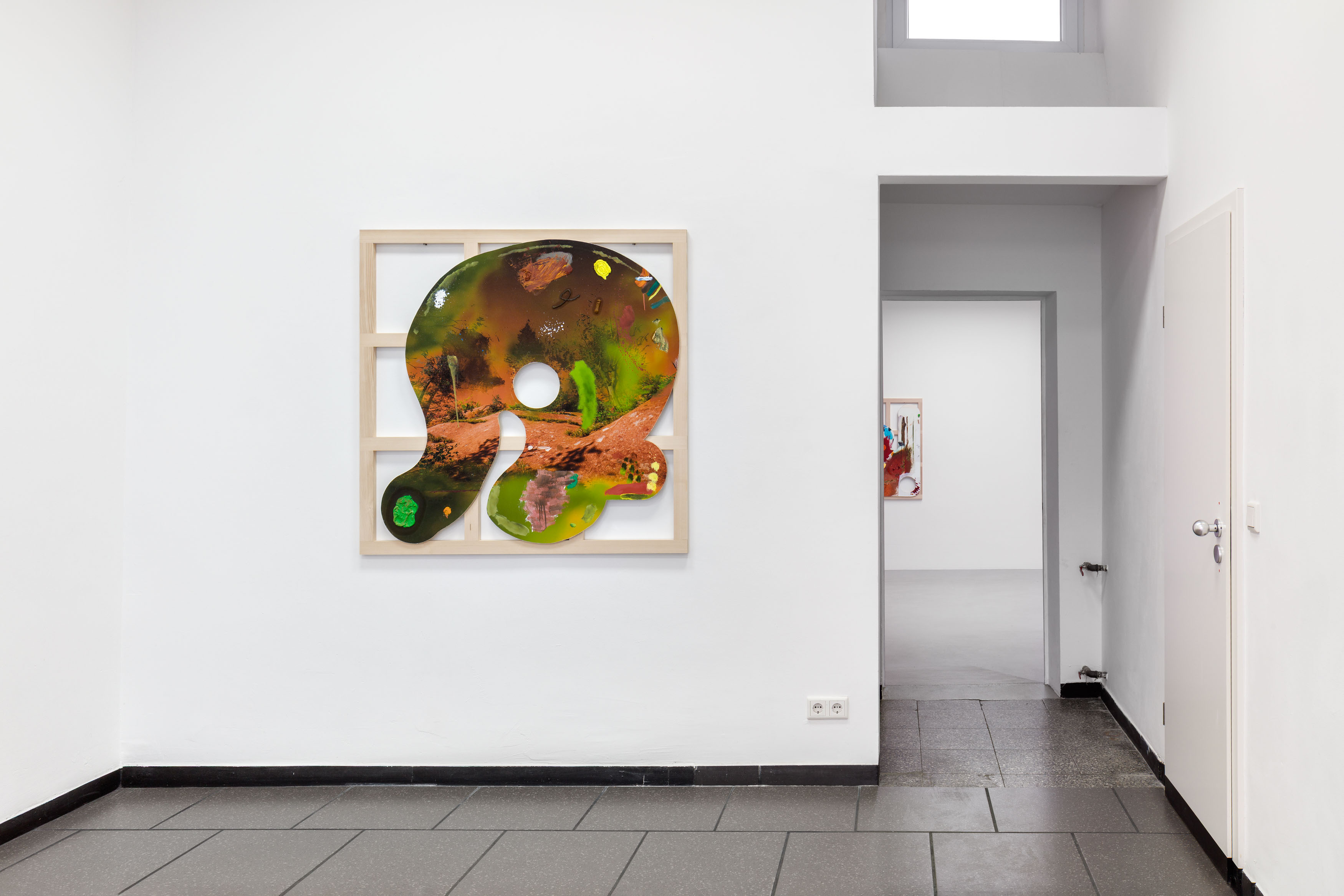
initially, there are some forms by Andreas Breunig. Johannes Bendzulla fills them with digital landscapes and fragments of painters’ palettes, so nothing’s left to the unconscious. you see artificial forests, paths and blooming meadows, in between smudged color residue. nature, generated and rendered. then it’s printed. subsequently, Breunig comes in with paint. not irrelevant is less the question who does what or not but all that gets mixed up in the process.
the palette is no longer a plain tool but an image. the landscape opens up no space but remains planar. color hangs from the trees, blocks the path, sticks to the sky. print and paint do not neatly align. the printed color seeps into the painted one, as do the digital tree trunks and the wooden stretcher bars. everything shifts slightly, without committing, and that’s somewhat wicked.
even the forms don’t really know what they are. they allude to deformed painter’s palettes, puddles or bodies. at times they appear as if they wanted to creep by themselves like a seal in fetal position. they fracture the frame, not just figuratively. they lie on the wood, protrude from it, conceal and reveal it again. the images disregard their boundaries and step forth from behind the scenes like Helge Schneider in Texas: oh, the wall.
and then, there’s a hole in every image. an eye, a thumby grip hole, a mistake, an orifice. a spot, where the image ends and oh, the wall begins again. you look through and still get stuck on it.
the collaboration is not a polite add-on, it rather is a challenge. Bendzulla’s digital spaces collide with Breunig’s painterly interventions, without fully coming to terms with each other. the images assess how much data fits into painting and how much painting a print can stand. at times it seems as if color wanted to be a disturbance. then again, as if only to briefly check what’s already there.
the word Images thus gets larger and equally more precise. as if images were the comparative of image: a degree of comparison instead of an object. here the image is print, painting, surface, fragment, object, hole, frame and scenic residue. it hangs in between and appears as if it were still in the making.
who says A, has to B like
Image × Images × Imagest
perhaps images do not say more than a thousand words.
perhaps they say less but all at once instead.
Constantin M. Heller
(Translation: Alexander Serner)
Bilder
wer A sagt, muss auch B wie
Bendzulla x Breunig x Bilder.
ein bild sagt mehr als tausend
was sagen dann Bilder?
zunächst ziemlich wenig. der titel hält sich zurück. er verspricht keine these und redet auch nicht drumrum. Bendzulla x Breunig zeigen: Bilder.
das klingt fast zu einfach. ist es aber nicht.
die gemeinsamen arbeiten sind ohne titel. sie bestehen aus digitaldruck, öl und acryl auf büttenpapier, montiert auf holz. das bild ist nicht einfach gemalt und nicht einfach gedruckt. es kommt aus dem kopf, dem rechner, dem drucker, geht über die hand aufs papier und wird dann noch einmal von der malerei betreten. später betreten die bilder mit ihnen diesen raum, betreten durch ihre augen ihren kopf und wohnen dann dort.
am anfang stehen formen von Andreas Breunig. Johannes Bendzulla füllt sie mit digitalen landschaften und ausschnitten aus malerpaletten, die nichts dem unbewussten überlassen. man sieht künstliche wälder, wege und blumenwiesen, dazwischen farbreste und schlieren. natur, berechnet und gerendert. dann wird gedruckt. anschließend greift Breunig mit farbe ein. nicht unentscheidend ist weniger die frage, wer welchen teil übernimmt, oder nicht übernimmt, als all das, was dabei durcheinandergerät.
die palette ist nicht mehr nur werkzeug, sondern bild. die landschaft öffnet keinen raum, sondern bleibt flach. die farbe hängt in den bäumen, steht auf dem weg, klebt im himmel. druck und malerei liegen nicht sauber übereinander. die gedruckte farbe läuft in die gemalte weiter, wie die digitalen baumstämme in den holzrahmen. aber alles verschiebt sich leicht, ohne sich festzulegen, und das ist irgendwie geil.
auch die formen wissen nicht genau, was sie sind. sie erinnern an deformierte malerpaletten, pfützen oder körper. manchmal sehen sie aus, als wollten sie aus sich selbst kriechen, wie eine robbe in embryonalstellung. sie sprengen den rahmen nicht nur als redewendung. sie liegen vor dem holz, ragen darüber hinaus, verdecken es und lassen es wieder hervortreten. die bilder treten über den rand und aus der kulisse, wie Helge Schneider in Texas: oh, die wand.
außerdem ist da noch ein loch in jedem bild. ein auge, ein daumengriff, ein fehler, ein durchgang. eine stelle, an der das bild aufhört und oh, die wand wieder anfängt. man sieht hindurch und bleibt trotzdem daran hängen.
die zusammenarbeit ist keine höfliche ergänzung, eher ein test. Bendzullas digitale bildräume treffen auf Breunigs malerische eingriffe, ohne sich vollständig zu einigen. die bilder prüfen, wie viel datei in malerei passt und wie viel malerei ein druck aushält. manchmal sieht es aus, als wolle die farbe etwas stören. manchmal, als wolle sie nur kurz nachsehen, was schon da ist.
das wort Bilder wird dadurch größer und zugleich genauer. als wäre bilder der komparativ von bild: eher ein grad als ein gegenstand. hier ist ein bild druck, malerei, träger, ausschnitt, objekt, loch, rahmen und rest landschaft. es hängt dazwischen und wirkt, als wäre es noch mitten im machen.
wer A sagt, muss auch B wie
bild x Bilder, x am bildesten
vielleicht sagen Bilder also nicht mehr als tausend worte.
vielleicht sagen sie weniger, aber dafür alle gleichzeitig.
Constantin Heller